Transgender Care in the United States

Transgender care saves lives throughout the American public every day. Transgender care is extremely important and should not be infringed upon, despite what the political climate has been stirring up with new anti-Trans laws being introduced almost daily around the country. Trans people deserve access to life-saving medical care just like everyone else, even if that care looks different to those who are not trans. Healthcare and Gender affirming care should not be limited or outlawed, as Trans people are at a higher risk of suicide than most American citizens. The trans population in the United States is climbing, and limiting care should not be the goal if this community is growing and making up a large portion of the United States population. Moreover, Transgender youth are at a high risk of suicide as well, so limiting access to care for them could be detrimental to their mental health, leading to suicide.
Transgender population in America
According to the US Census Bureau, in the United States, nearly 2.3 million Americans identified as Transgender in 2024, making up 0.95% of the U.S population. According to the UCLA School of Law, out of this population, only 152,000 are Trans adults enrolled in Medicaid, and of this number, only 69,000 Medicaid beneficiaries live in states that guarantee coverage for gender affirming care. The rest of the states they reside in have either banned Medicaid coverage of gender-affirming care or left its coverage uncertain, as state laws have been silent on the issue. This number should not be an option, and all people covered under Medicaid should have access to life-saving medications such as gender affirming care.
Suicide Rates in Trans People
Trans people are at a high risk of suicide. In a study conducted by the UCLA School of Law, it was found that 81% of Transgender adults in the U.S have thought about suicide at some point in their lives. While 42% of Transgender adults have attempted suicide, and 56% of trans adults have engaged in self-harm at some point in their lives. With limited care, we could see this number skyrocket as more acted-on thoughts and more successful attempts occur.
“How can Transgender care be lifesaving when being trans is just a choice?”
Being trans is not a choice; it’s an inborn knowing that transgender people have and can often identify or trace these feelings to early memories, but often cannot explain their feelings until more education is given, leading to a period of deep reflection to start gender affirming care so that their presenting identity matches what they feel inside. Sometimes this reflection never occurs and often leads to suicide.
In Conclusion
Transgender care is needed throughout the United States to save lives and make people feel adequate in their own skin. Gender Affirming care is a lifesaving human right that people should have access to in order to lower suicide rates among the trans community and, therefore, across the United States of America.
Transgender flags held by multiple people Image found on istock.com
The new don’t say gay bill in Florida

Republican Senator Stan McClain has sponsored and introduced to the Florida Senate the “Freedom of Conscience in the Workplace Act”. This act is being referred to as the “Don’t Say Gay or trans in the workplace Act.” First introduced in 01/09/2026, it has been introduced in the judiciary and has been read for the first time. This act would prohibit employers from providing a non-binary or other option on job applications or official forms, prohibit employers from requiring employees to refer to another person as their preferred pronouns, and make any adverse action taken against the employee that is refusing an act of discrimination under Florida Statute Ch. 760 more commonly known as the Florida Civil Rights Act.
This Act, introduced by McClain, also prohibits employees from requiring an employer or their colleagues to refer to a person as their preferred pronoun if the pronoun does not correspond to the employee’s gender assigned at birth. Moreover, this bill will make it an unlawful employment practice for any employer that accepts any state or government funds on any level to require training or instruction on sexual orientation, gender identity, or gender expression, or they will face repercussions under SL Statue Ch. 760.
This story affects many members of the LGBTQ+ community in Florida as it rides on the coattails of the “Parental Rights in Education” passed in 2022, which limits classroom discussion of the LGBTQ+ community, preventing students and faculty from talking about family members or themselves regarding the queer community in schools.
Now the “Freedom of Conscience in the workplace act” is scaring more members of the community and making them feel unseen and discriminated against, One Florida Senator Kristen Arrington, stating “The bill really does promote government employees and contractors to harass transgender individuals by allowing them to intentionally misgender them by using disrespectful pronouns and having no consequences, and this is a license to discriminate free from accountability. It seems that it’s an attempt to create a hostile work environment for LGBTQ people, particularly transgender Floridians.
However, Senator McClain had this to say about the act, “We’re not going to allow state employees to be coerced by their employers or subcontractors going forward.”
as of 2/02/2026, The Freedom of Conscience in the Workplace Act, was voted YEAS 6 NAYS 3 and is now in judiciary as of 2/4/2026, expected to pass in the republican ruled Florida Senate. (https://flsenate.gov/Session/Bill/2026/1642)
Sources
Senate Bill 1642 (2026) – The Florida Senate. (2026). Flsenate.gov. https://flsenate.gov/Session/Bill/2026/1642/?Tab=Citations
Senator McClain – The Florida Senate. (2026). Flsenate.gov. https://www.flsenate.gov/senators/s9
Ogles, J. (2025, March 31). FL Senate pushes ahead with “don’t say gay at work” bill. Advocate.com. https://www.advocate.com/politics/florida-dont-say-gay-work#toggle-gdpr
Johnson, M. (2022). THE DANGEROUS CONSEQUENCES OF FLORIDA’S “DON’T SAY GAY” BILL ON LGBTQ+ YOUTH IN FLORIDA. https://www.law.georgetown.edu/gender-journal/wp-content/uploads/sites/20/2022/04/The-Dangerous-Consequences-of-FLs-Bill-on-LGBTQ-Youth-M.-Johnson.pdf
The image of the state capital is royalty free from Getty Images.
A profile of Daniel Bean
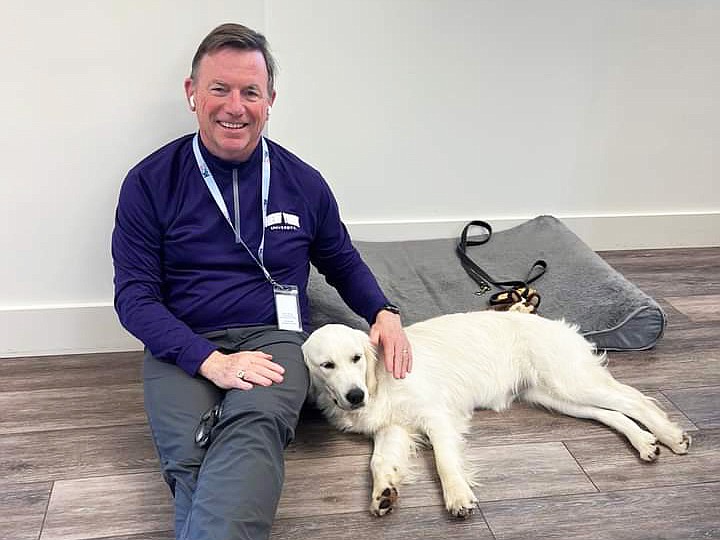
K9s For Warriors is the nation’s leading provider of service dogs for veterans suffering from Post Traumatic Stress Disorder, Traumatic Brain Injury, or Military Sexual Trauma. At the helm of this prestigious organization sits Daniel Bean, the organization’s current CEO. He has been part of the organization since its humble beginnings in Shari Duval’s garage.
“Shari Duval told me I would be helping her in 2010. She put me on the board, and then I became the board chair. We then lost two CEOs quickly (in 2024), and I was at a point in my life where I could retire and felt I could help K9s for Warriors. Before she died, Shari told me to do whatever it took to make sure K9s kept going. This is the best job I’ve ever had (CEO).”
Before Dan became CEO or was a part of the K9s for Warriors Board. He himself served his country in the United States Armed Forces. Dan served for 25 years in the United States Navy, retiring at the rank of Captain. He earned the Legion of Merit among numerous other awards during his lengthy career. While he was still in the Navy, he used his scholarship to attend law school and joined the Judge Advocate General. This began his long-standing legal career.
When Dan left the Navy, he relied on his legal skills and knowledge to pave his own way forward. He began in a private law practice, clerked for federal judges, and rose to managing partner of Holland & Knight before starting his own legal practice with a colleague. Through all this, Dan remained highly involved in the Veteran community. He championed the idea of Jacksonville, Florida, having a Navy Military Museum and was a big part of the USS Orleck being moved and stored as a museum in Downtown Jacksonville. It currently sits as the only warship attraction of its kind in the state of Florida.
With all of his professional success and accolades, when asked what was the best or wisest advice he ever received was, he went back in time to his days of sports writing for Vanderbilt and answered with words from Coach C.M Newton that he was given as a rebuttal to a question Dan asked him about LSU playing the same night during an SEC tournament, at a conference in front of ESPN and at least fifty sports writers Dan says that Newton responded with , “Son, I only worry about those things I myself can control, you ought to try it.” Dan went on to add, “It was like the heavens parted for me, and that’s how I’ve really run my life since that point.”
“Dan is a great Mentor. He has a lot of wisdom to share; you can apply it in different ways, more than you think when he gives it. Some people take it as criticism, but it’s not, it’s a different perspective.” Says K9s For Warriors Chief Revenue Officer Lindsay Grayson. “It’s empowering to work for Dan. He lets you drive in the lane you know best.”
Dan showcases his strengths as a determined and wise man of many hats day in and day out. Helping where he can throughout his community, friends’ families, and colleagues. He’s always willing to lend a hand, especially to the Veteran community. Despite all of this, he says his biggest accomplishment in life is, “My kids, I’m very proud of them.” Which sums up Daniel Bean perfectly.
Service Dogs and Veteran’s
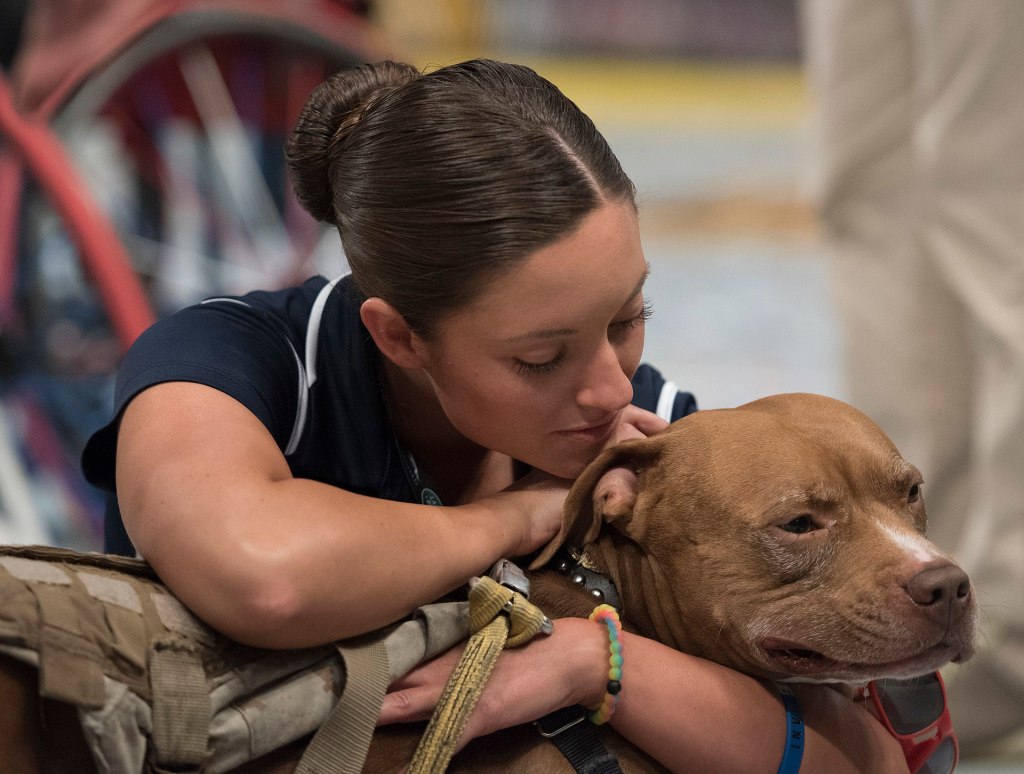
Roughly 22 veterans die by suicide every day. It’s a number that’s tough to swallow or even fathom. However, it happens. United States Veterans are at risk of suicide for so many different reasons, but the main three are Post-Traumatic Stress Disorder (PTSD), Traumatic Brain Injury (TBI), or Military Sexual Trauma (MST). There are several ways that veterans can cope with these diseases, such as various medications, therapy, and even equine therapy and service dogs that are trained in specific tasks to decrease the felt symptoms of their diagnosis. These four-legged canine companions can help Veterans reclaim their independence and lead fuller, more satisfying lives.
Trained Tasks
Service dogs are trained to perform tasks that help reduce the symptoms of specific ailments. In this case, a psychiatric service dog for someone who has PTSD, MST, or TBI is trained in tasks to reduce those symptoms. This can include creating space for their handler in crowded spaces by just their presence or, on cue (command), a cue where the service dog would walk and stand in front of their handler perpendicular and hold this position while the handler takes a step back could have many names, but “Stand” is a popular cue for this behavior. Furthermore, a cue to have the dog go to the opposite side of the handler in a reverse sit position, so they are positioned to watch the handler’s back, can reduce the handler’s anxiety when they have to turn their back to a crowd or when doing something like shopping for groceries. This cue is called “Look”. Moreover, deep pressure therapy is a proven treatment for lowering cortisol levels, the main hormone responsible for stress. Service dogs can be trained to apply deep pressure therapy by lying across their handlers’ laps, acting as a weighted blanket. They can hold this position until the handler feels calmer and ready to continue with whatever they were doing before the anxiety and stress hit them. This cue can be referred to as “Lap” or “My lap” and has a tremendous effect on veterans suffering from PTSD, MST, or TBI.
Reclaiming Independence
Some veterans suffering from PTSD, MST, or TBI report needing a support person to go out with them when running errands or taking care of menial tasks in public. Going out alone for them is tough, and this can affect relationships and overall quality of life. A service dog removes the need for a support person from the veteran, as the service dog fills that role for them. They never travel alone, and they have something with them that shows them unconditional love and support with no judgment. Service dogs allow veterans to start and eventually regain complete independence in their lives by providing the confidence that comes with having their companion with them at all times, in all situations.
Living a Fuller Life
Service dogs don’t just impact the handler, in this case, veterans, but their families as well. A service dog can help a veteran mend relationship issue they might be facing due to self-isolation or need for a constant support person in their everyday life, leading to fewer personal boundaries in relationships. Service dogs can help families see that their family member or veteran is happier, as they don’t seem as isolated or depressed as before. The risk of suicide lessens with a service dog leashed to their veteran. And that helps take the toll off their families and friends.
In conclusion, Service dogs are not only great companions for veterans who might be battling the invisible wounds of war, but a lifesaving medical device that can help reduce the number of suicides by twenty-two a day. Service dogs can help in many ways, but most prominently for America’s heroes by executing cues proven to lower cortisol levels. Service dogs can help veterans gain independence and lead fuller, more fulfilling lives.
The image used is a commons image from wikipedia commons.
 DevonFedler